Automation
OpenClaw and the Lessons of the Agent Hype: Autonomy Needs Security Architecture
42,900 exposed instances, one viral agent: What the OpenClaw case teaches us about security — and why autonomy requires architecture.
•
acceleraid Editorial Team
5 min read
01
Acquire
Recognize signals
02
Onboard
Control activation
03
Grow
Next Best Action
04
Retain
Reduce churn
05
Reactivate
Reclaim potential
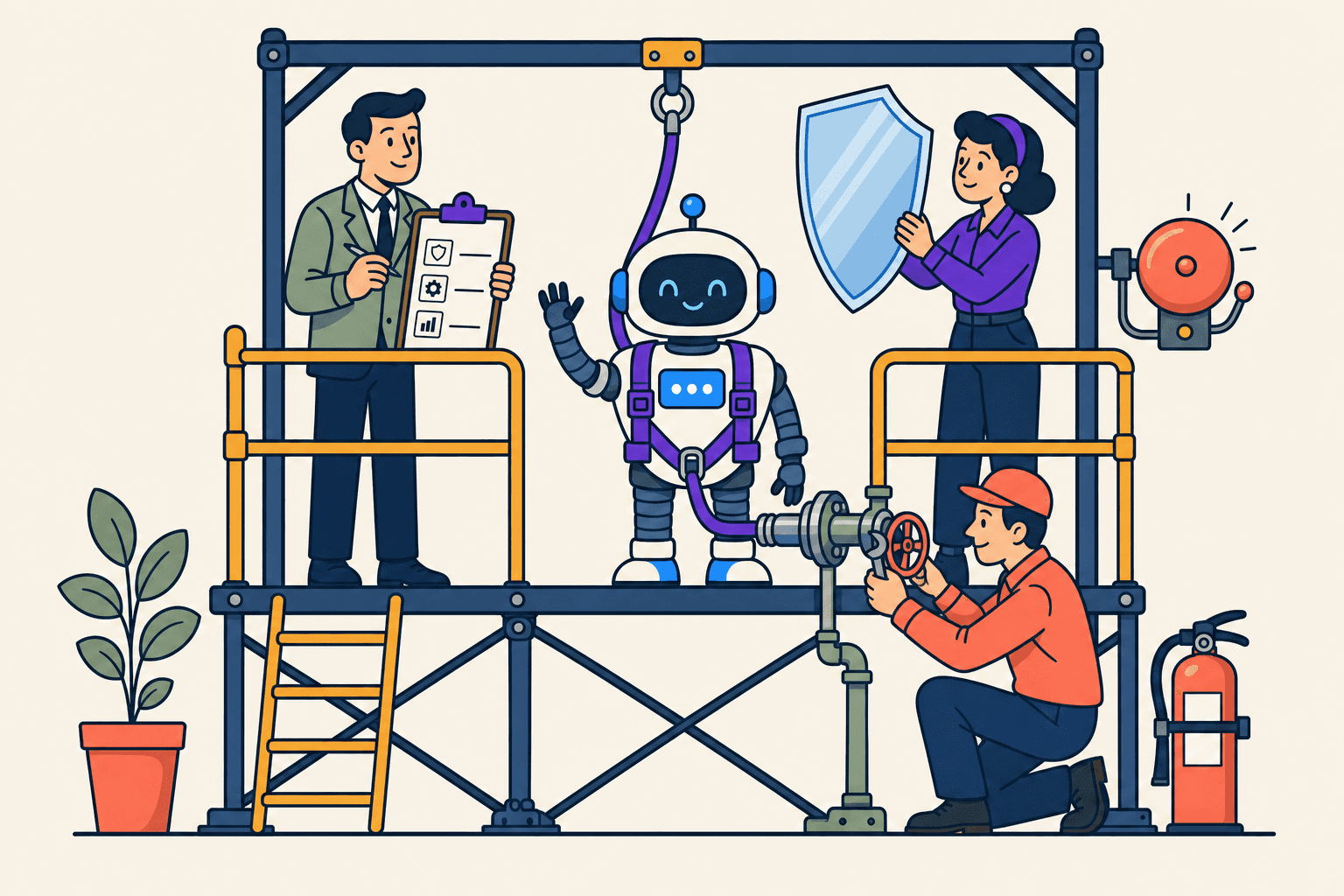
No AI project has shaped the year 2026 so far quite like OpenClaw. The open-source AI agent by Austrian developer Peter Steinberger — previously known as Clawdbot and Moltbot — gathered more than 135,000 GitHub stars within a few weeks after its viral launch at the end of January, becoming one of the fastest-growing open-source projects of all time. The promise is alluring: a personal assistant running 24/7 on your own computer, which can connect to any AI model you choose and takes commands via WhatsApp, Slack, or iMessage — sending emails, managing files, researching in the browser, executing shell commands. It is living freedom of model choice and maximum autonomy. And at the same time, it is the biggest security lesson of the agent era to date.
The balance after six months
In rapid succession, security research has presented findings on OpenClaw that are rarely so clear. SecurityScorecard's STRIKE team found around 42,900 OpenClaw control panels accessible via the internet in 82 countries; about 15,200 of these instances were considered vulnerable to remote code execution. With CVE-2026-25253, a critical vulnerability was documented through which attackers could take over local instances via a one-click attack. In parallel, security vendors reported campaigns involving malicious extensions in the project's community marketplace aimed at access data, cloud credentials, and crypto wallets. Kaspersky, CrowdStrike, McAfee, and others published their own warnings and hardening guides within weeks — a remarkable occurrence for a single open-source project.
Important for a fair assessment: Hardly any of these findings are based on a novel model flaw. The problems are classic — exposed administration interfaces, weak authentication, unverified third-party extensions, overly broad permissions. What is new is the height of the fall: A compromised agent is not a compromised tool, but a compromised identity with all the access rights of its owner.
Why agents raise the security question anew
A chatbot that gives a wrong answer creates a quality problem. An agent that executes a wrong action creates an incident. As soon as an AI system moves from text output to execution — sending emails, modifying files, controlling systems —, the security model changes fundamentally. The agent acts with real privileges based on inputs that third parties can influence: a prepared email or website is enough to inject instructions via indirect prompt injection, which the agent treats as a legitimate task.
Added to this is the organizational pattern that security teams know from shadow IT, now in an intensified form: OpenClaw installations typically arise outside of any security review — on private devices, developer machines, or home servers, connected to work accounts like email, calendar, or file storage. From the organization's perspective, this creates a privileged access point to company data that no one inventories, patches, or monitors.
The lessons are transferable
It would be convenient to dismiss the findings as a problem of a single hobby project. The opposite is true: OpenClaw shows in fast forward which questions every organization must answer that wants to deploy agents productively — whether self-built, open-source, or purchased:
Least Privilege for agents: An agent needs granular, task-specific permissions instead of blanket full access. Any permission it does not have, it cannot abuse — and neither can an attacker through it.
Isolation as standard: Agents belong in controlled environments — containers, virtual machines, dedicated accounts — and not on the device where online banking is also run.
Trust boundaries for inputs: Everything the agent reads — emails, websites, documents — is potentially hostile input. Critical actions therefore need approval levels and human-in-the-loop moments.
Extensions as a supply chain: Third-party plugins and skills are software supply chains and deserve the same scrutiny as any other dependency.
Inventory and observability: Those who do not know which agents are running with which privileges in the company can neither harden nor shut them down.
What the findings mean for regulated industries
For banks and insurers, the situation is further aggravated because agents here encounter data and processes that enjoy special protection. An agent that accesses customer data, approval processes, or internal systems is an ICT risk from a regulatory perspective just like any other critical system — with the same requirements for access control, logging, and incident handling. The idea of an employee pairing a freely configured agent with work accounts without risk management and information security knowing about it is incompatible with this framework. The pragmatic path is therefore not a ban, which experience shows only increases shadow IT, but a sanctioned offering: an enterprise-owned agent with a clear permission model, centralized logging, and verified integrations — attractive enough that no one has to resort to the DIY path. That the need is real is precisely shown by the OpenClaw case: employees reach for such tools because they have a genuine need for productivity. Organizations that take this need seriously and serve it in a controlled manner solve two problems at once — they gain productivity and close the uncontrolled surface at the same time.
Autonomy yes — but as an architectural achievement
For companies, especially in regulated industries, this leads to a clear consequence: The question is not whether AI agents are coming — they are here, and their productivity promises are real. The question is whether autonomy is introduced as a DIY solution or as an architectural achievement. Governance, permission models, auditability, and the separation of knowledge and execution layers are not additional functions to be retrofitted, but the foundation on which autonomy becomes justifiable in the first place.
This also applies to the question of model choice: The freedom to connect any model, which makes OpenClaw so attractive, is a legitimate need — companies do not want to lock themselves into a single vendor. But it belongs in a framework that regulates permissions, data access, and logging centrally, instead of leaving both to the individual employee's terminal device. Openness to models and security architecture are not a contradiction — they only become a product together.
In a few years, the OpenClaw episode will likely be seen as the moment when the industry learned to treat agents as what they are: privileged digital identities. Organizations that translate this lesson into their deployment decisions now will get both — the productivity of autonomous assistants and the control required in an emergency.
Illustration: AI-generated. AI-supported content: When creating our articles, we use AI technologies and automated agents, including those from Microsoft, Google, OpenAI, Anthropic, and other providers. Topics, professional orientation, and final approval lie with our team.
Further Insights
We use cookies 🍪
Strictly necessary cookies (e.g. Pipedrive forms) remain active. With your consent, we also use Google Analytics (analytics) and Leadfeeder (visitor identification). Learn more in our Privacy Policy.